Kadavil Thrikkovil Sreekrishna Swamy Temple
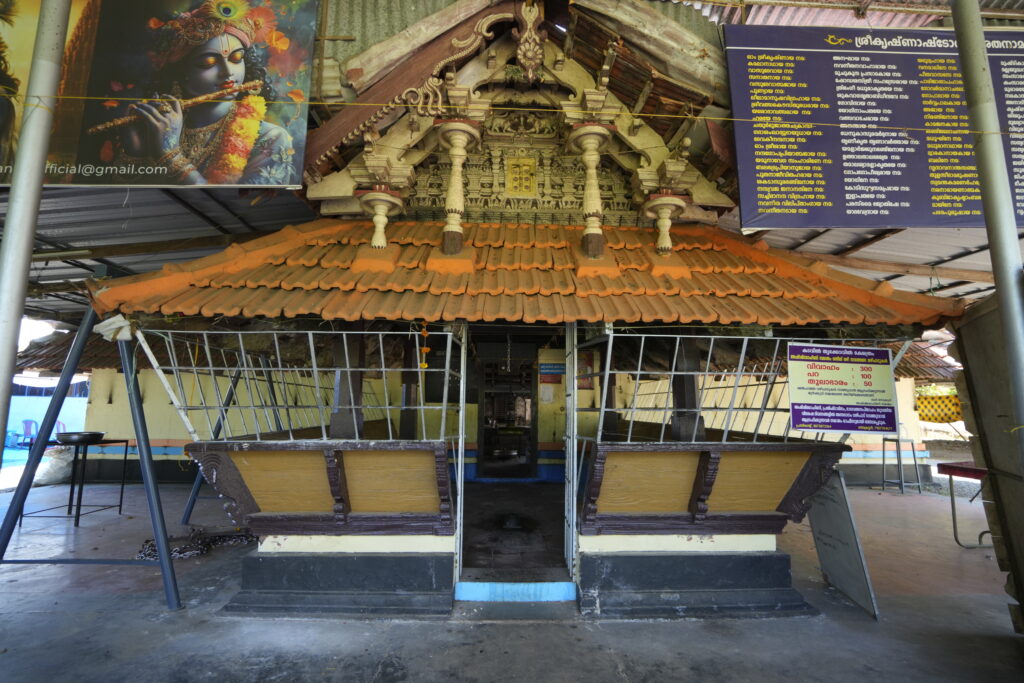
Nestled inside the quiet village of Udayamperoor approximately 16km from Kochi, the Kadavil Thrikkovil Sreekrishna Swamy Temple houses the idol of Sreekrishna in his calmest form. Next to the temple pond, are the idols of fierce Durga and Narasimham. As per the local lore, the temple used to be lively with the sounds of children from nearby houses playing inside the temple premises. Narasimhamoorthy was disturbed by this, but Sreekrishna enjoyed their presence. So, a dispute arose between the two deities leading to Narasimha idol to be placed across the pond on the other side where he still resides peacefully.
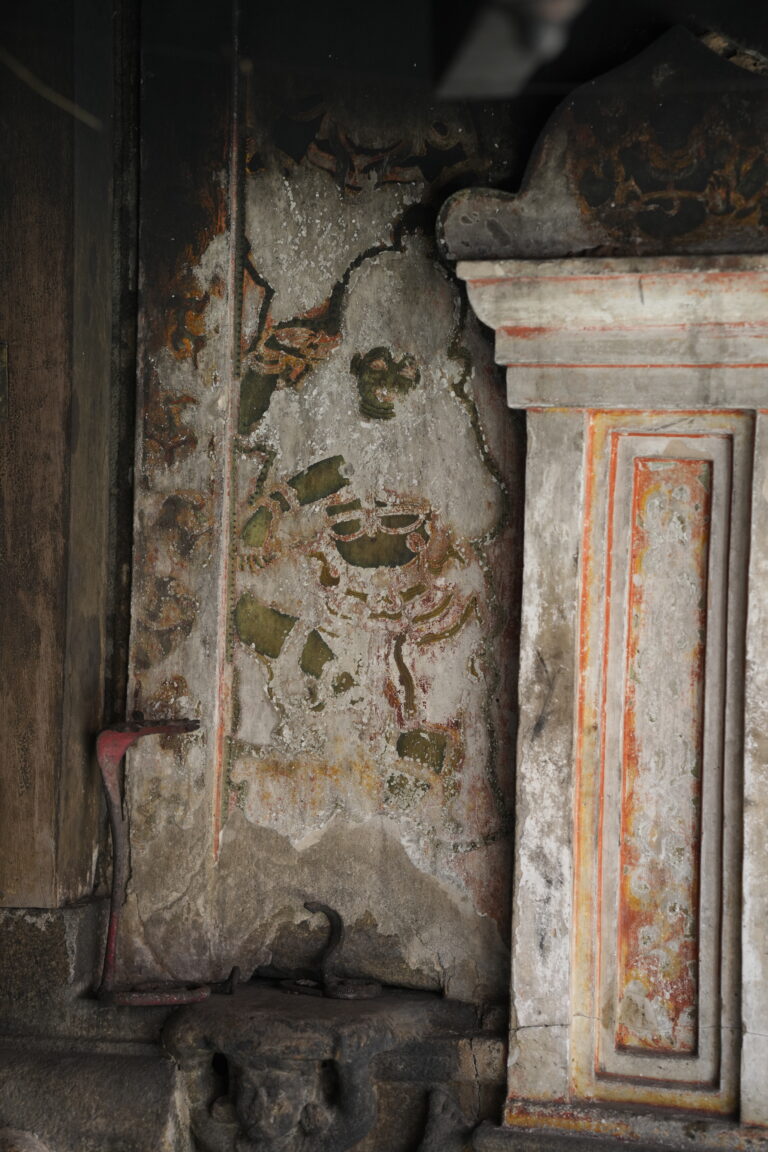
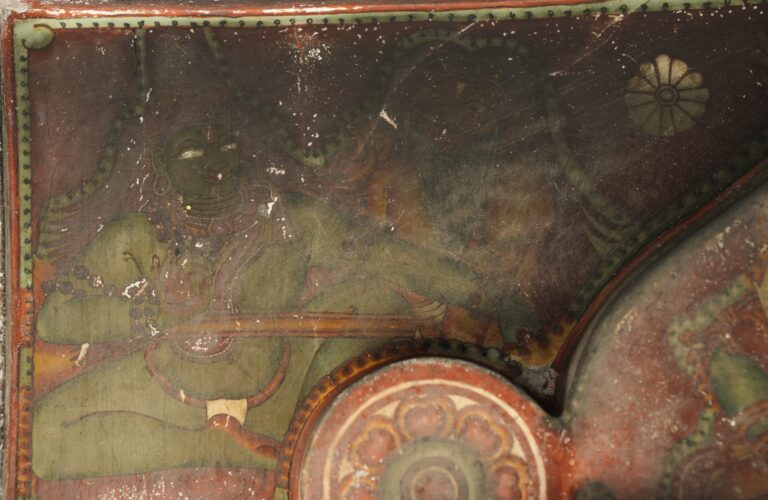
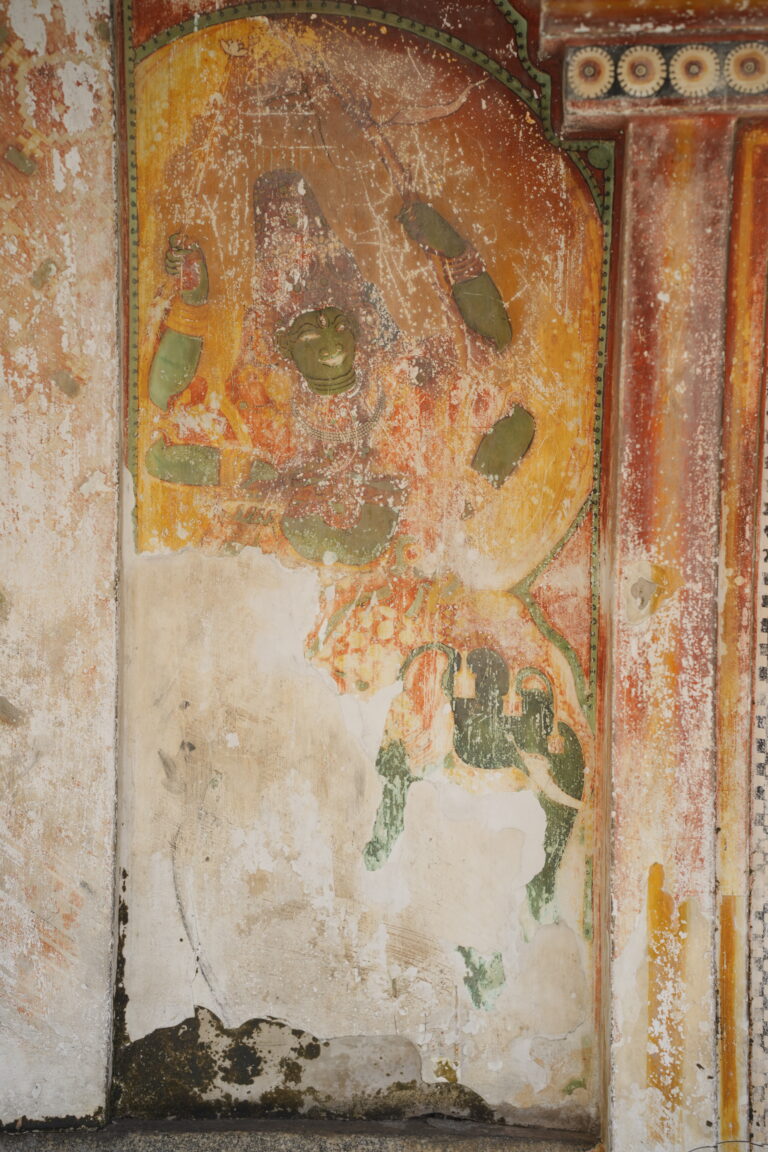
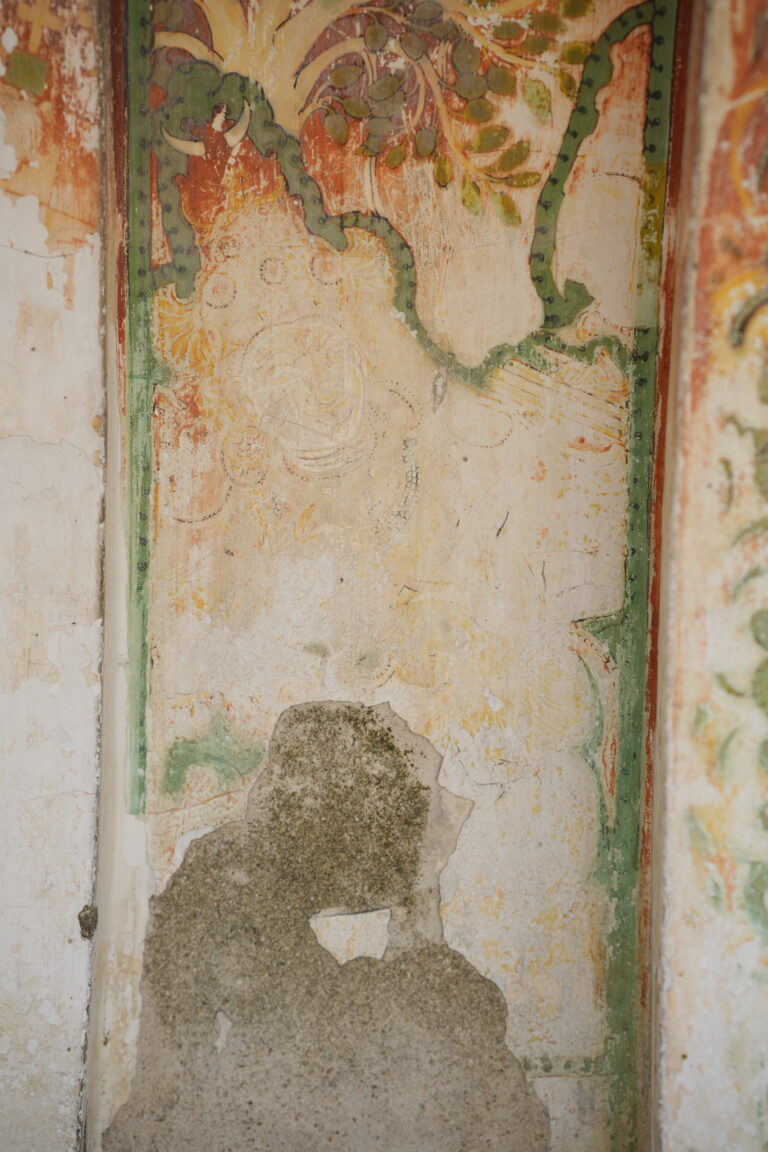
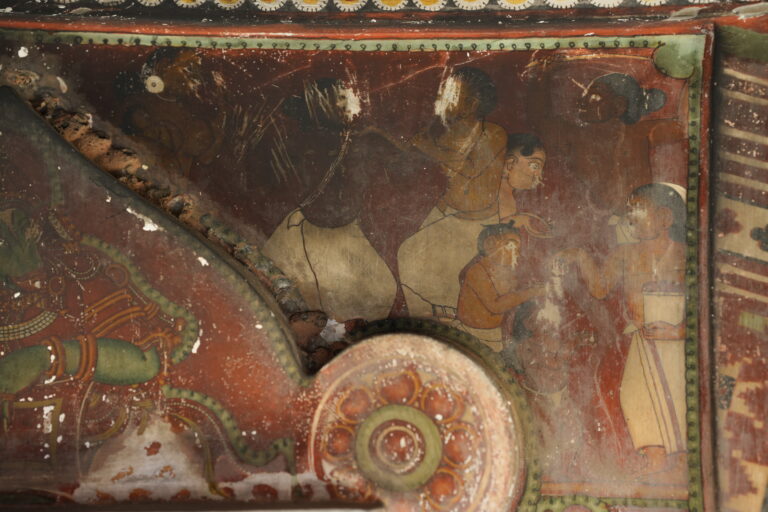
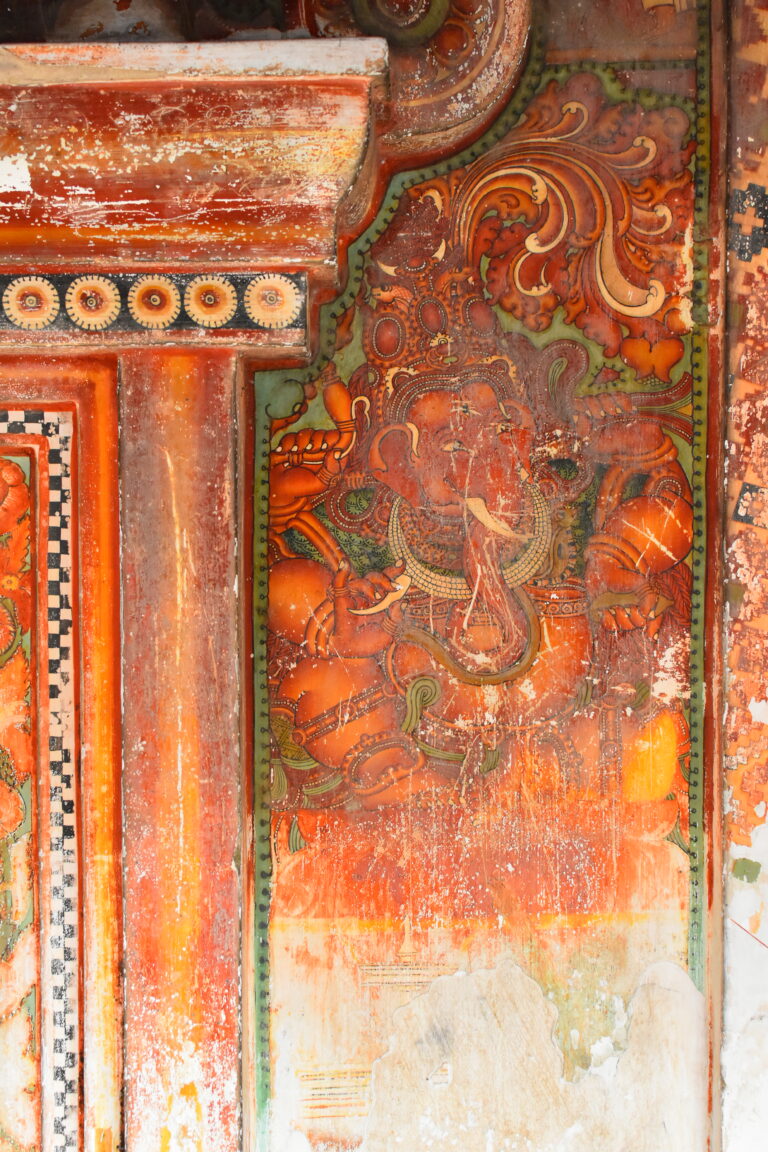
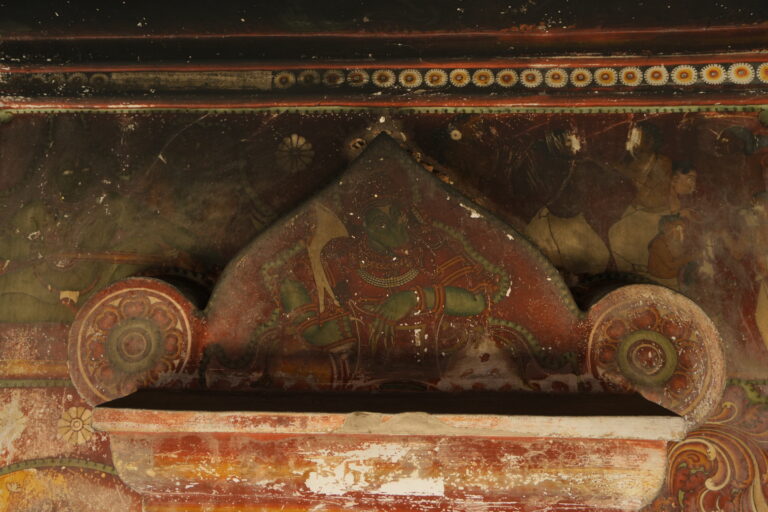
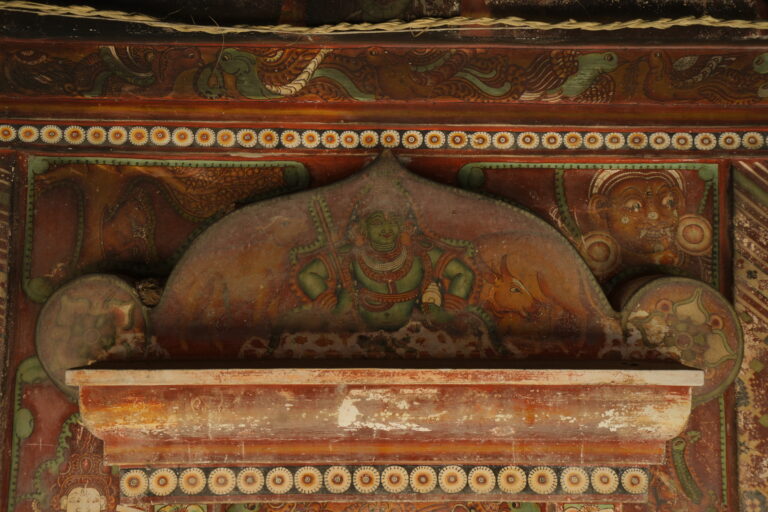
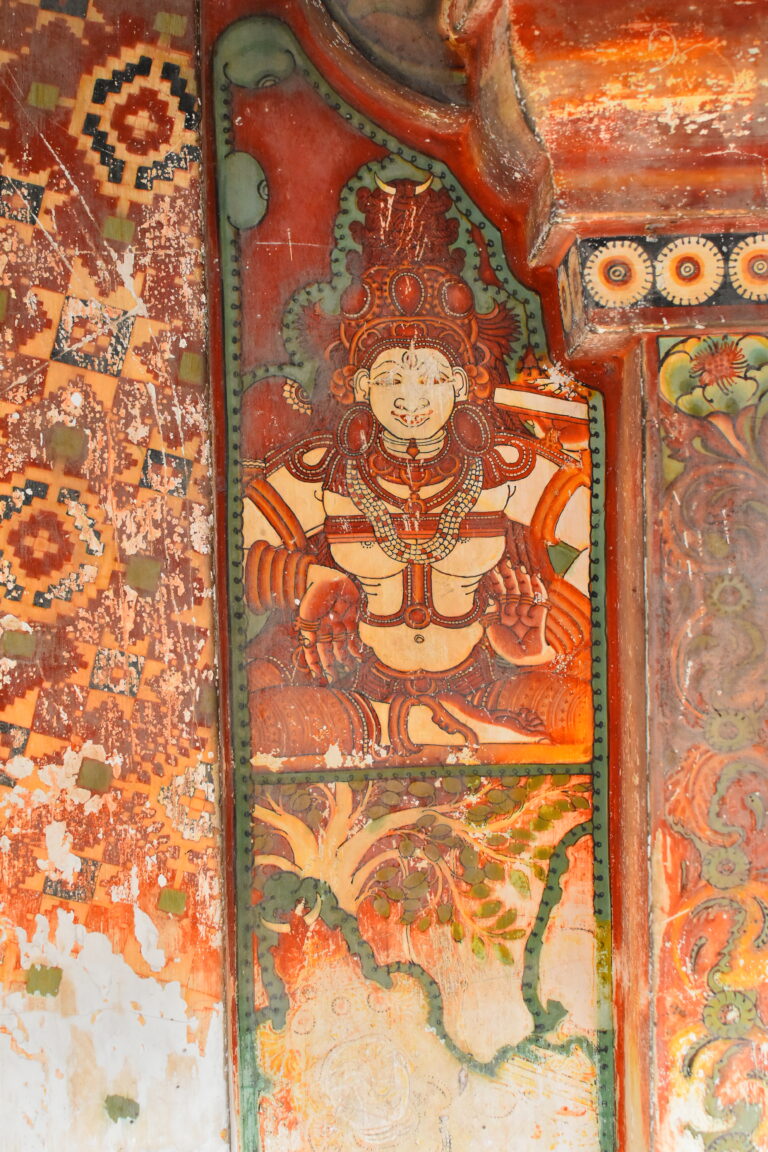
The tales surrounding this temple are never-ending, yet it is important to shift our attention to the numerous mural paintings around the sanctum. An unknown artist or perhaps a group of artists came together to compose all the intricate murals. The murals still stand out despite years of damage. The panels on either side of the srikovil has been subject to much damage, particularly due to soot from oil lamps accumulating over it. There are some rare depictions as well, like the figure of Ashtabuja Venugopala, Dhaanya Lakshmi, Indra on top of an elephant and Kalki. Dr. M G Sasibhooshan in his seminal text, Keralathile Chuvarchithrangal talks about how Kalki is almost never drawn in temples, atleast not in his complete form but here there is a rare, complete form of Kalki depicted. Dr Sasibhooshan talks about how this depiction might be born out of the concerns of the local populace who reached out to Krishna in hopes of being protected against the invading Tipu Sultan's army.
The temple is also an example of how the murals are in a vulnerable state. The paintings are damaged due to the exposure to lamp soot, plaster loss due to age and vandalism. Faces of almost all gods are scratched out deliberately, yet they retain their divine presence amidst the damage.
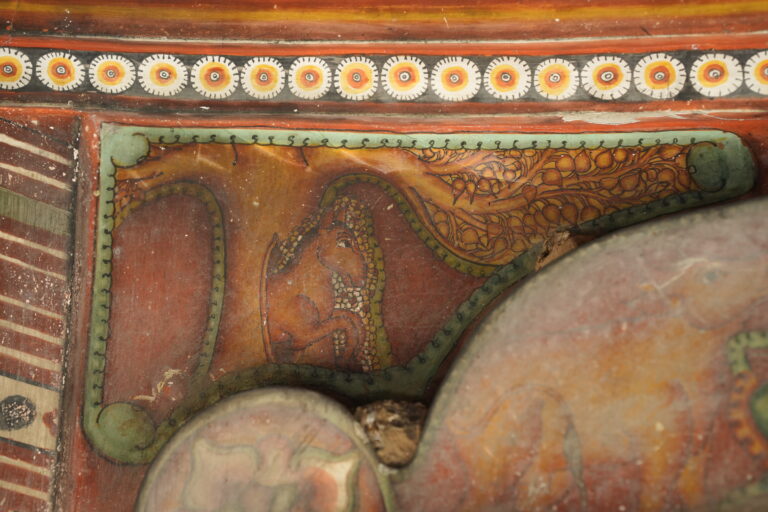
There are murals near the roof as well, barely visible yet mostly undamaged. They are unique and whimsical in nature.
Another significant thing to note about these paintings is the names of patrons inscribed beside the paintings. Dr Sasibhooshan notes that these may be inscribed by artists who did not know the malayalam script and merely copied out the scrawls. This suggests that the artist behind the paintings maybe from lands beyond Kerala, making this a perfect example of cross-cultural flow of artistry. Furthermore, some of the patrons were people from the fishermen caste and others who were denied temple entry at that time. Dr Sasibhooshan notes that it is remarkable for all communities of the area to come together and contribute to the depiction of this art.