Shakthipanchakshari
Detail Photos
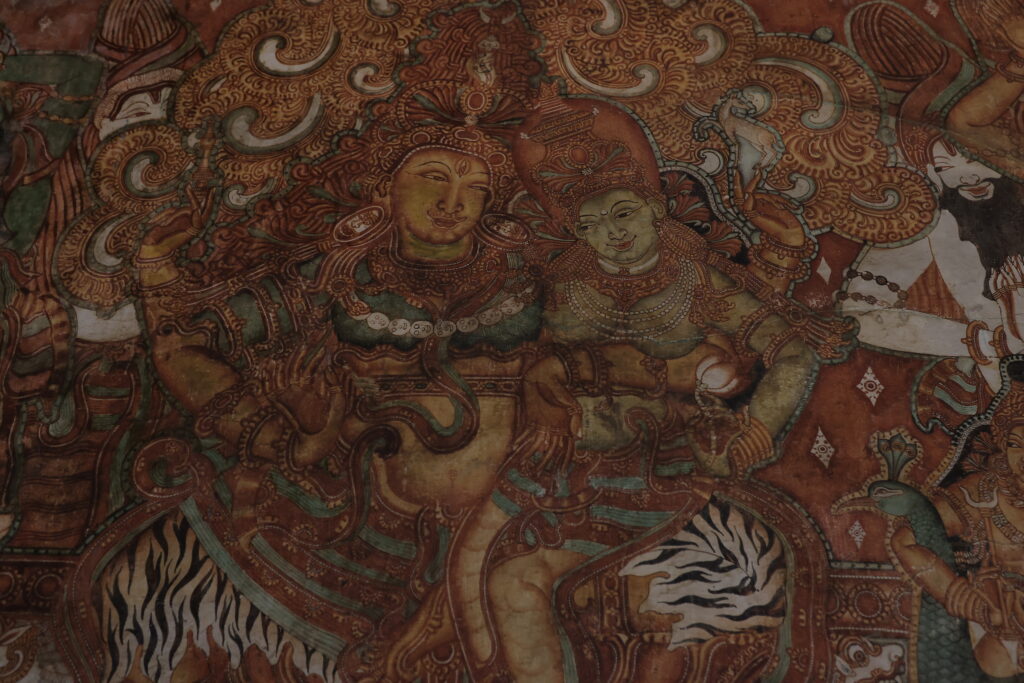
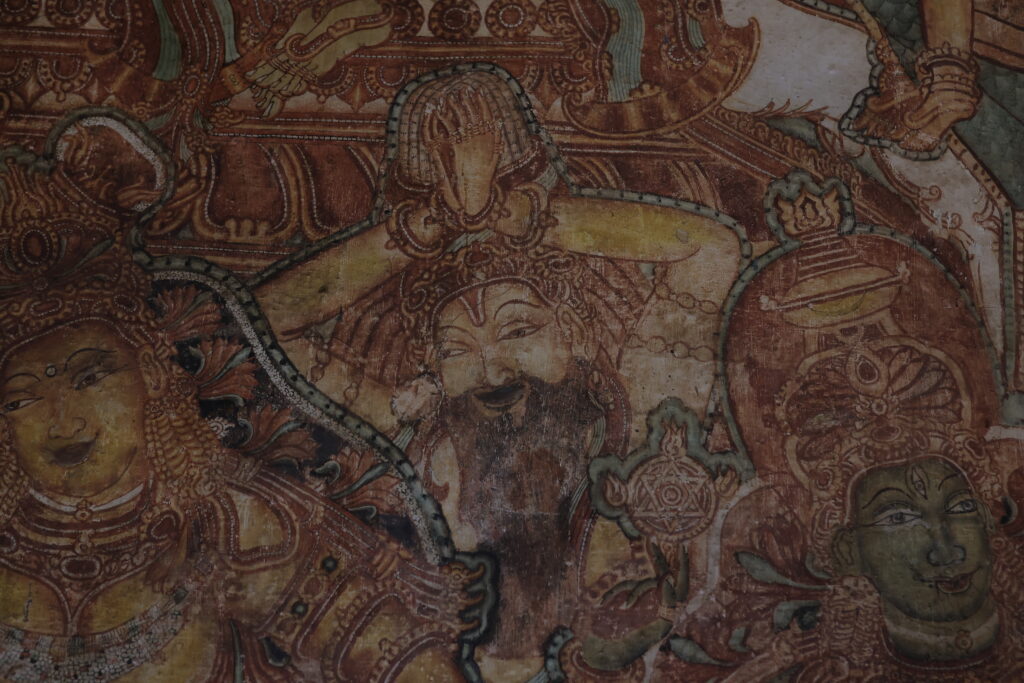
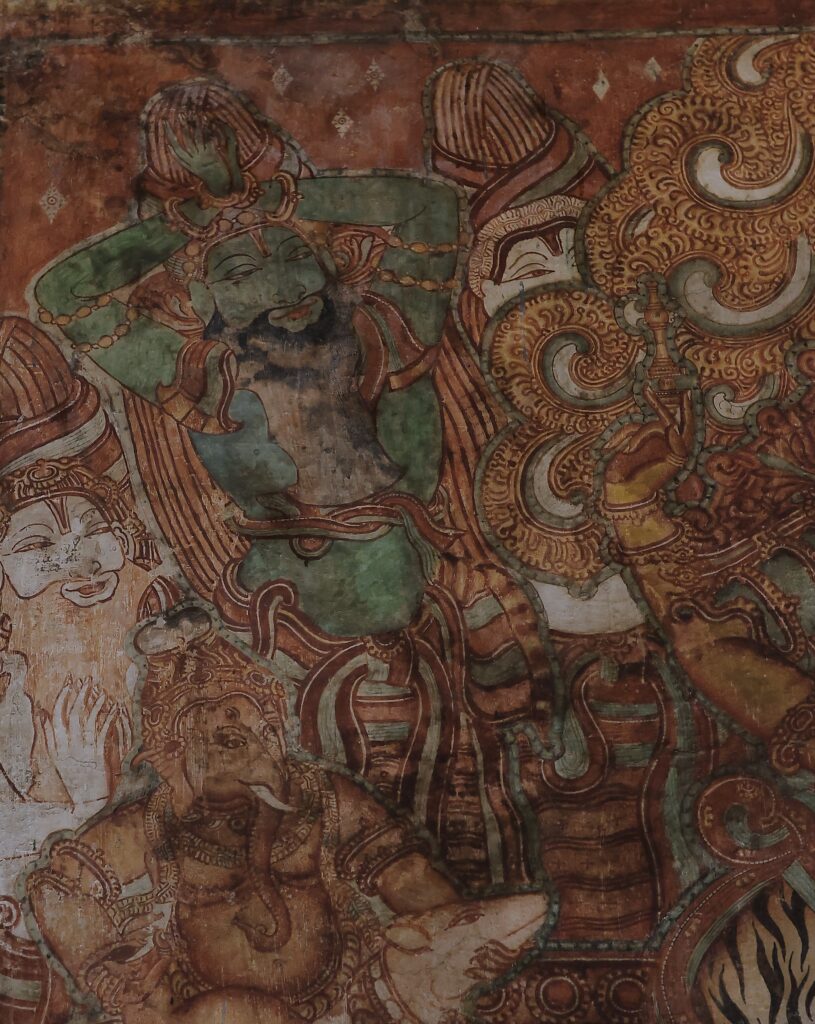
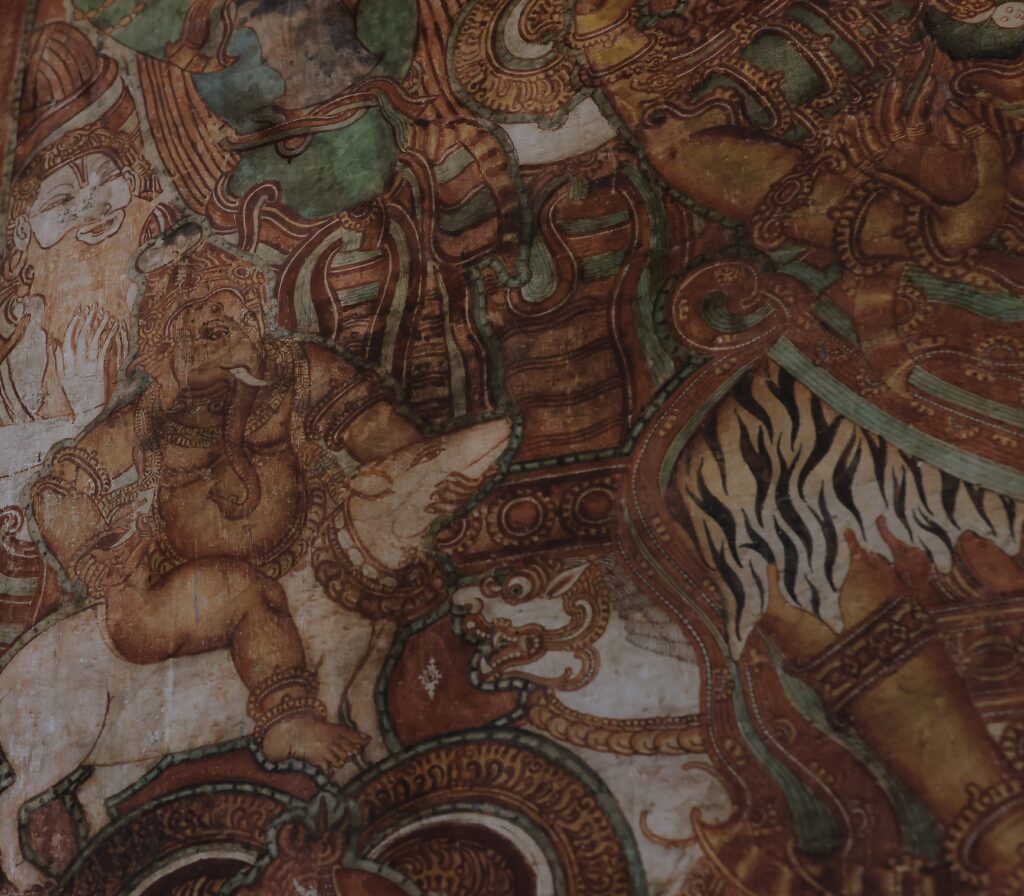
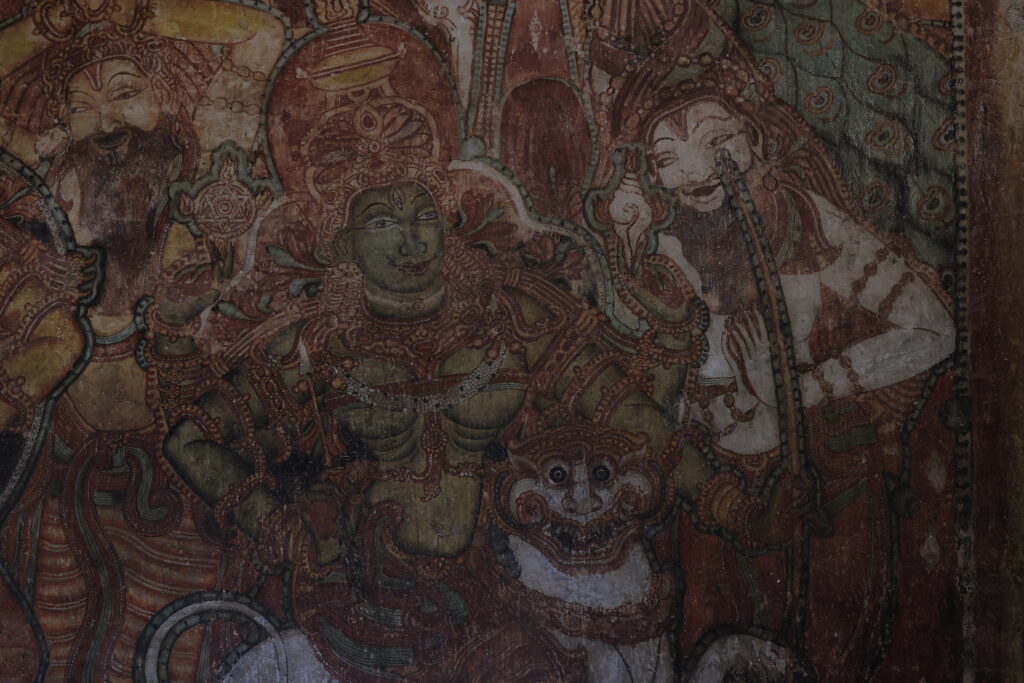
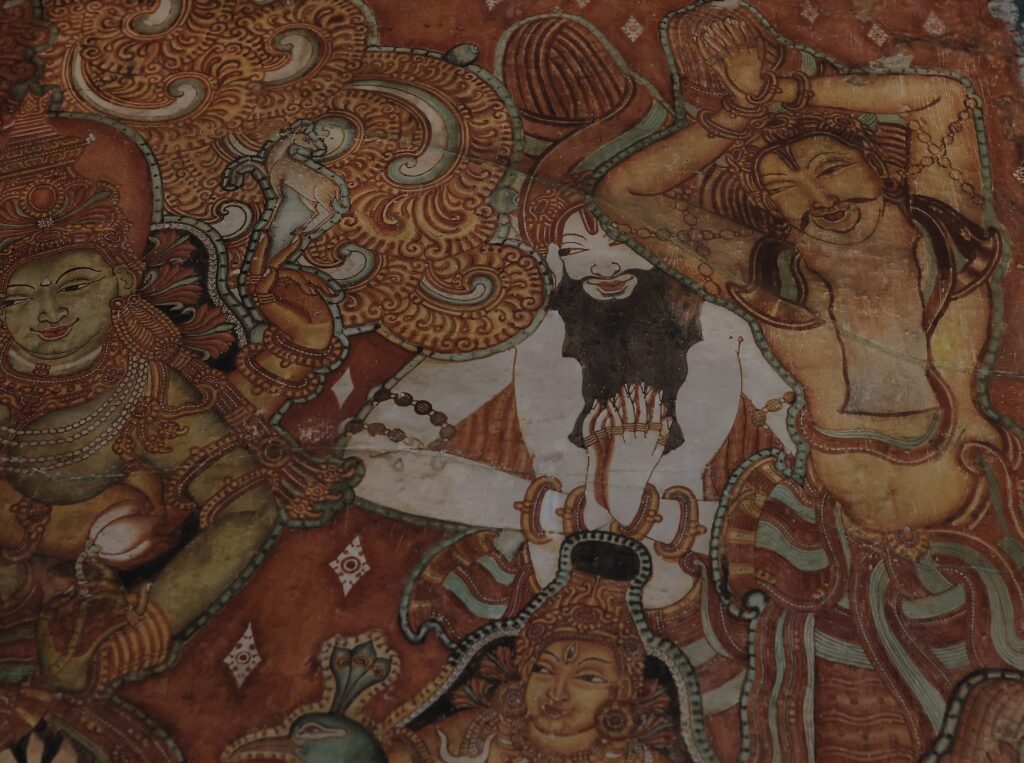
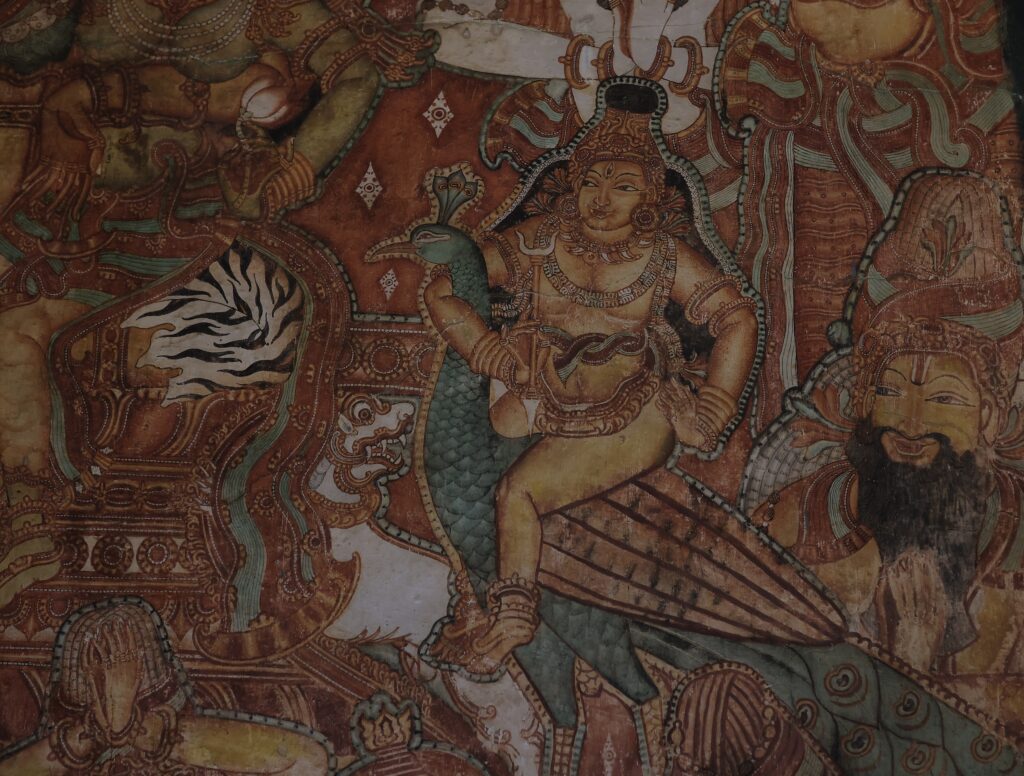
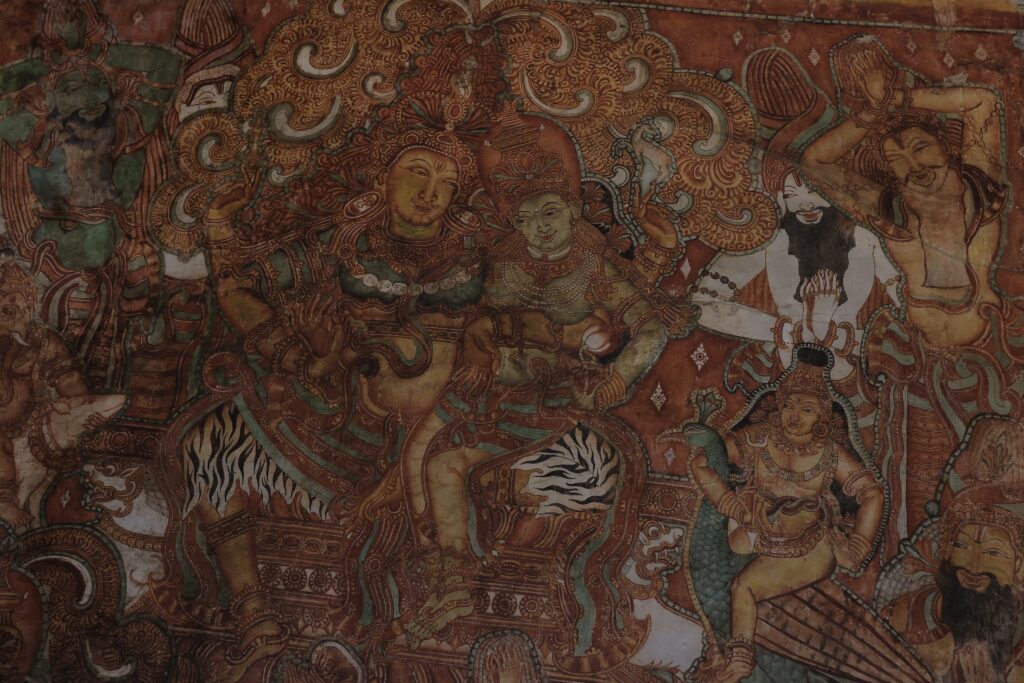
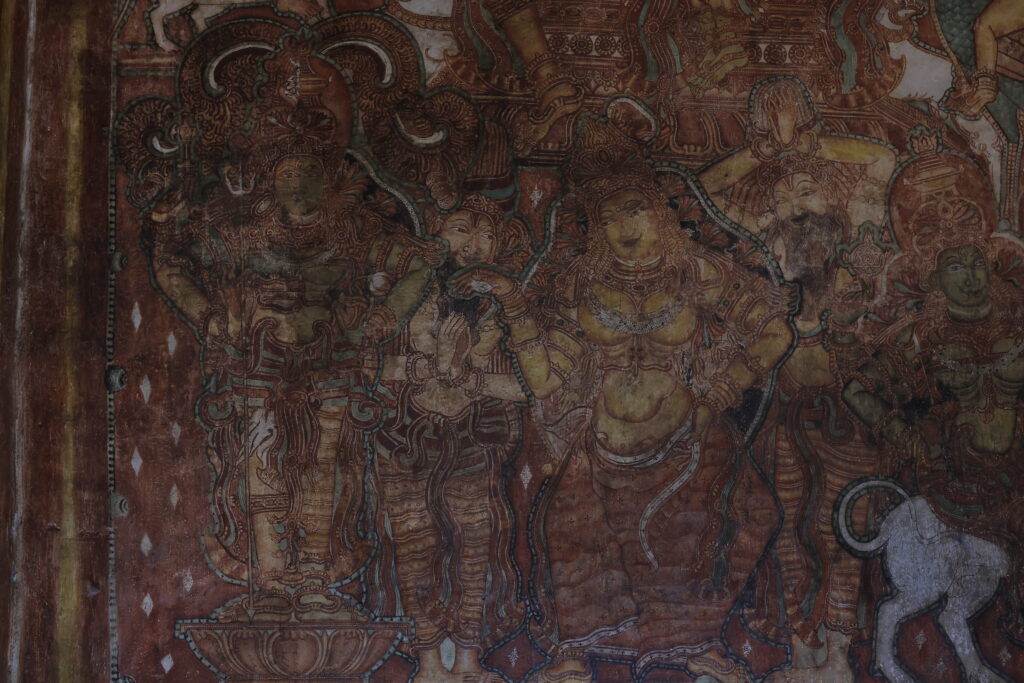
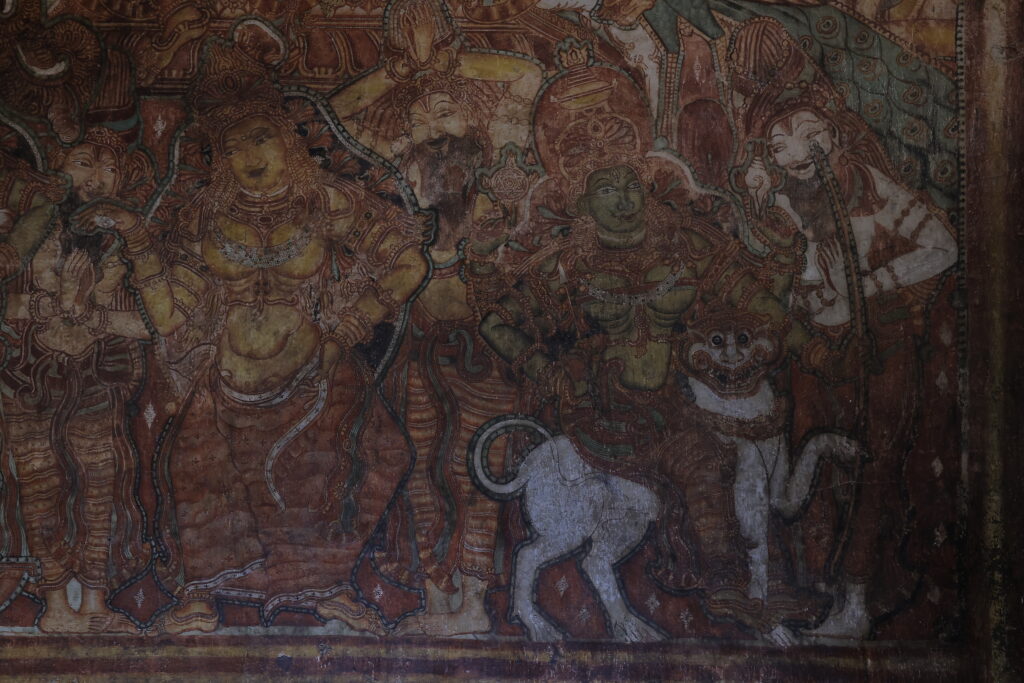
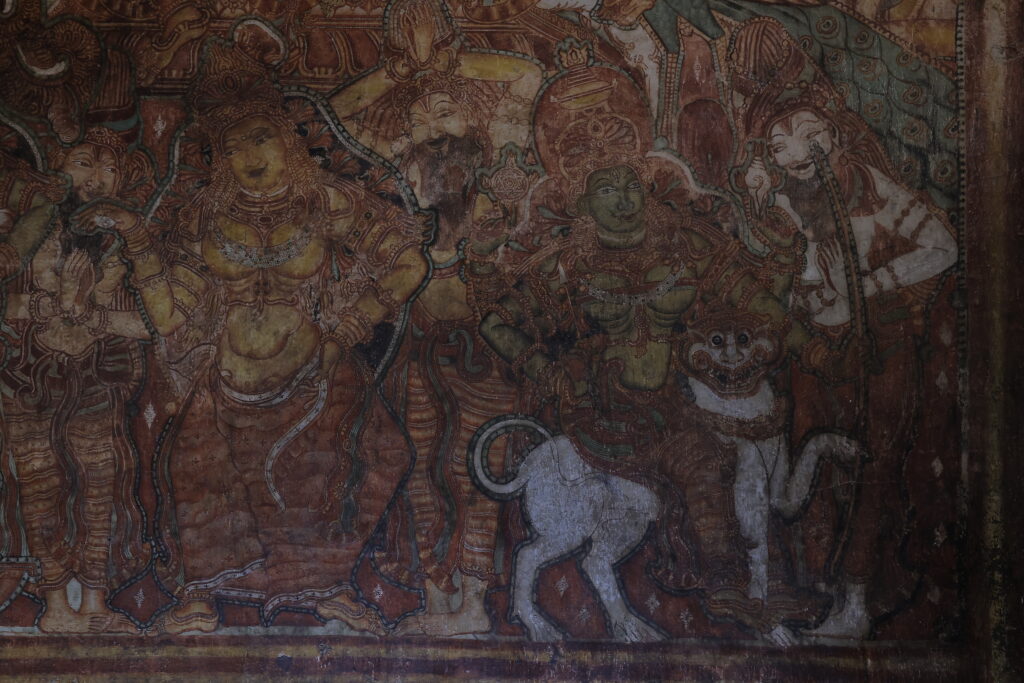
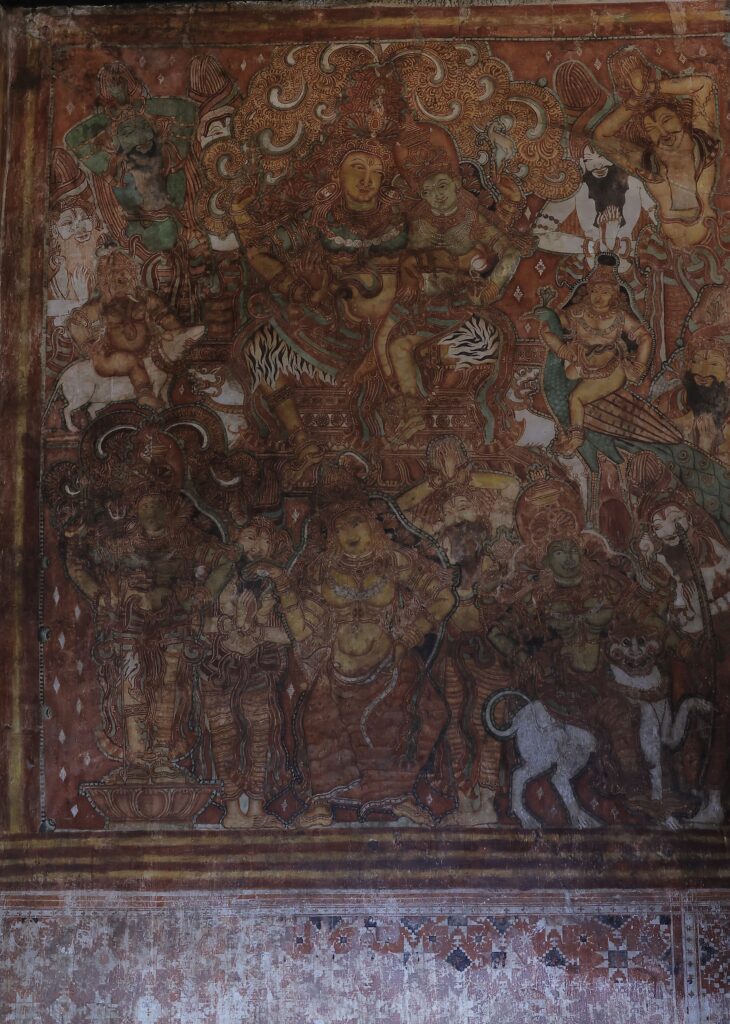
This is the Shaktipanchakshari form of Shiva and Parvati depicted in this panel. There is Shiva, golden-skinned, with three eyes, tiger skin cloth, and green upper garment, and necklace of skulls, sitting on a throne. On his crown, there is Ganga and a serpent and the crescent moon. He is wearing earrings, necklaces, crown, bangles, armlets, rings, and anklets. Below is pulitholu, or tiger skin clothing. He is wearing a cloth patterned with green and red stripes. On his lap is Devi Parvati. She is green-skinned and is holding a lotus flower in her hand. Shiva is four-armed. He has an axe on his upper right hand, a deer on his upper left hand, his lower right hand in abhaya mudra, his lower left hand in varada mudra. Parvati is wearing a yellow skin garment, upper part of the dhoti is made up of green and red striped cloth. She is wearing earrings, necklaces, armlets, bangles, rings, and anklets, and a crown. To her left is Subramanya on top of a peacock. He is yellow-skinned and holding a veil or spear in his right hand, and his other hand is raised in abhaya mudra. To the right of Shiva is Ganapathi, with elephant head, golden skin, holding a broken tusk in his hand, and holding the head of the mouse, his mount, with the other hand. There are several sages surrounding them, three white-skinned, two golden-skinned, and one green-skinned. They all have long flowing beards and hair made up in a bun. They all are wearing strings of rudraksha and have their hands, palms folded together in anjali mudra. The pedestal upon which Shiva and Parvati is seated is ornately decorated. Below them there is Ardhanarishvara being depicted. Half of the body of Ardhanarishvara is green-skinned and holding a lotus flower. It represents the essence of Parvati. The other side is yellow-skinned and holding a trishul and an axe in both of its arms. There is partial. The crown is also divided into half, with half a serpent, Ganga, and crescent moon on top of it. Shiva wears a green upper clothing. Parvati is bare-breasted, as in the Ardhanarishvara form. Shiva is also seen wearing a leopard's tiger skin on his part of the body, while Parvati is wearing a yellow skin dhoti in her part of the body. They are standing in a pedestal. This figure suggests the union of male and female. To the left of this figure is Mohini. She is holding a white ball in her right hand and is holding the end of her sari using her left hand. She is decked with jewelry. She is yellow-skinned and in a playful mood. She has long flowing hair and a crown above her head. She is worshipped by sages on her left and right sides. The sages are white in color and holding their hands together in anjali mudra. They have long flowing beards. Beside Mohini is the form of Durga. Durga is seated above upon a lion. She is green-skinned and has four arms. One arm is holding a bow. The other is holding a shankha or conch shell. The upper right arm is holding the chakra, and the lower right arm is holding the arrow. The lion is white-skinned. She is also decked with jewelry. She seems all ready for battle. She is also revered by sages. A white-skinned sage appears beside her, holding his hands together in anjali mudra. The entire background of the scene of the panel is covered in red color, and there are mashipoovu motifs also depicted. Shiva's throne has two lions on either side of it.