Ganapathi pooja
Detail Photos
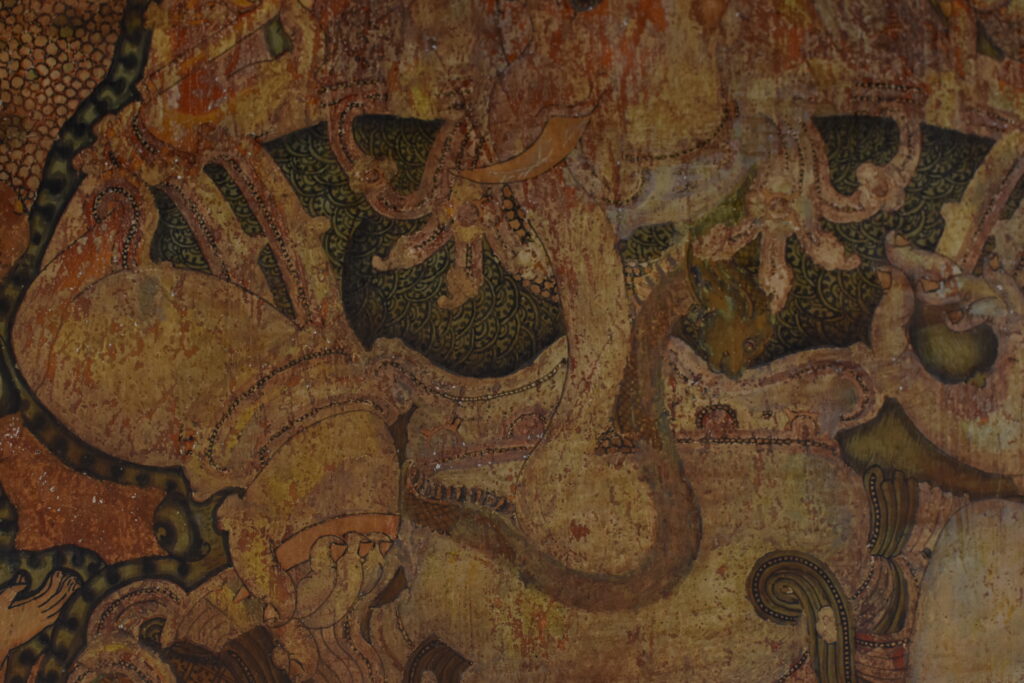
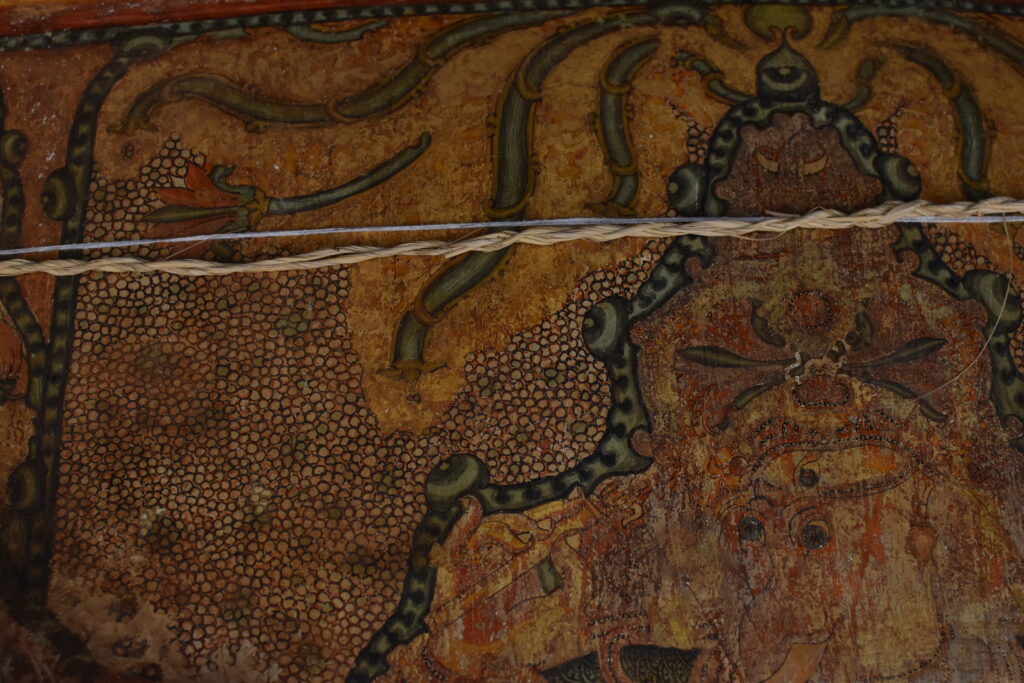
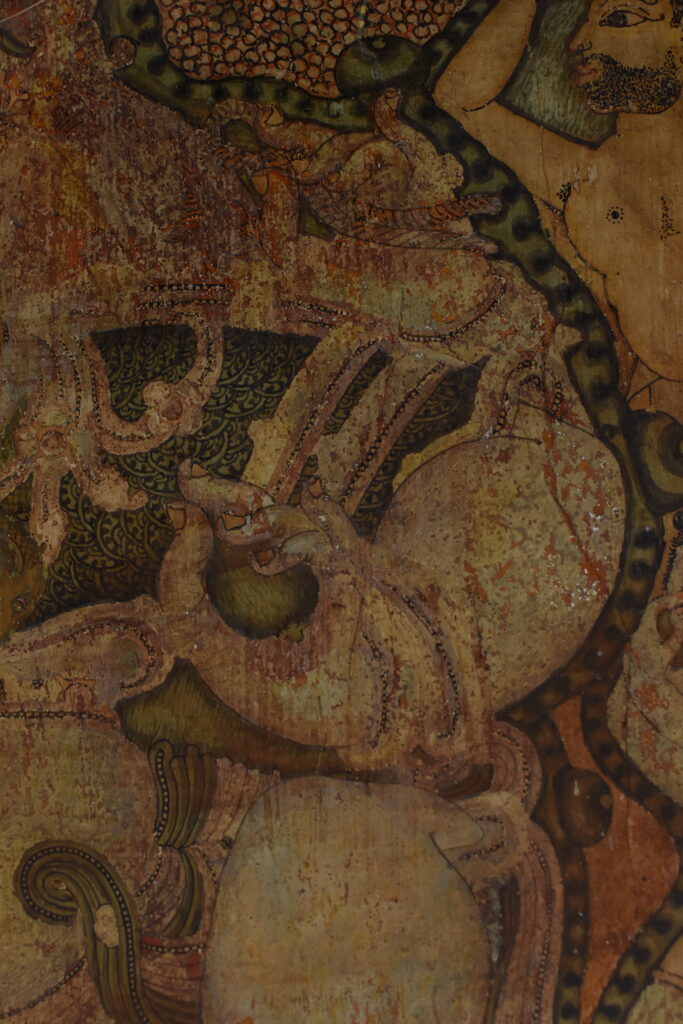
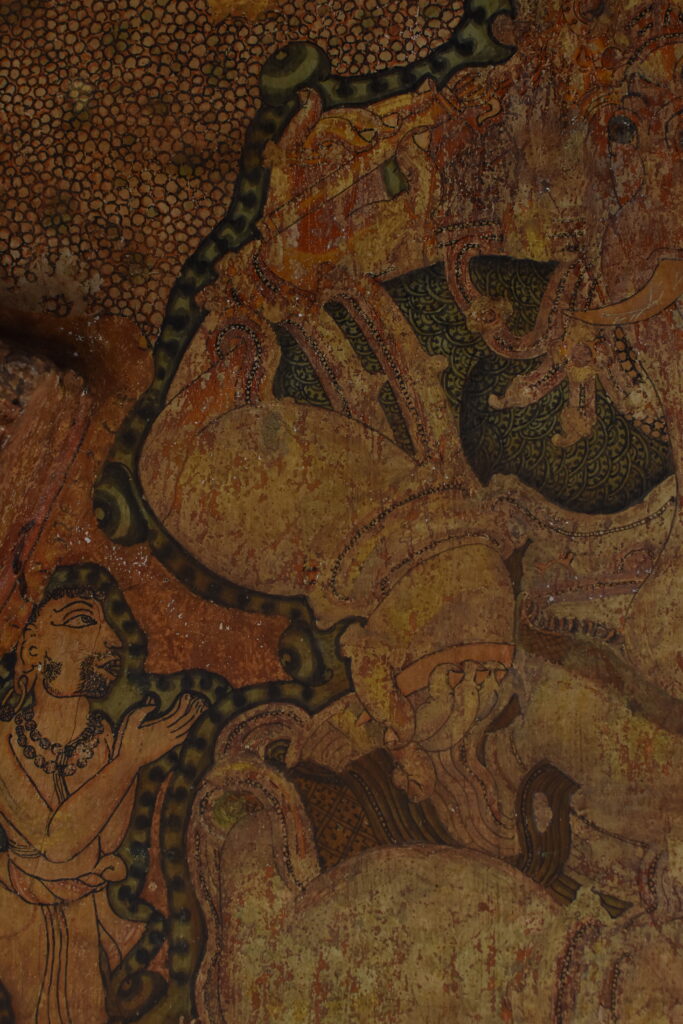
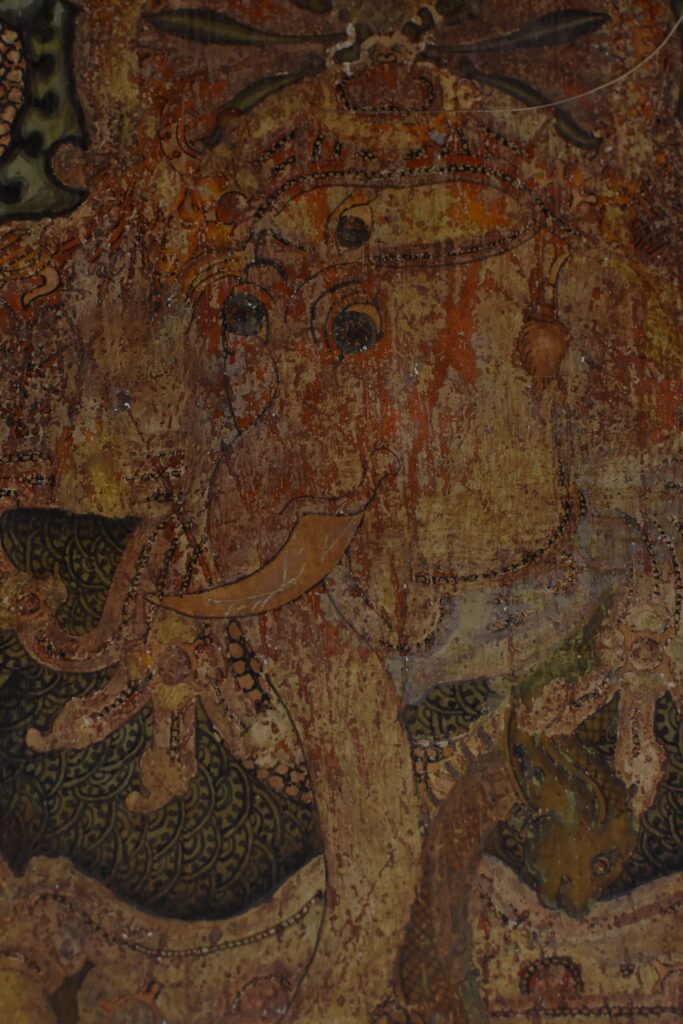
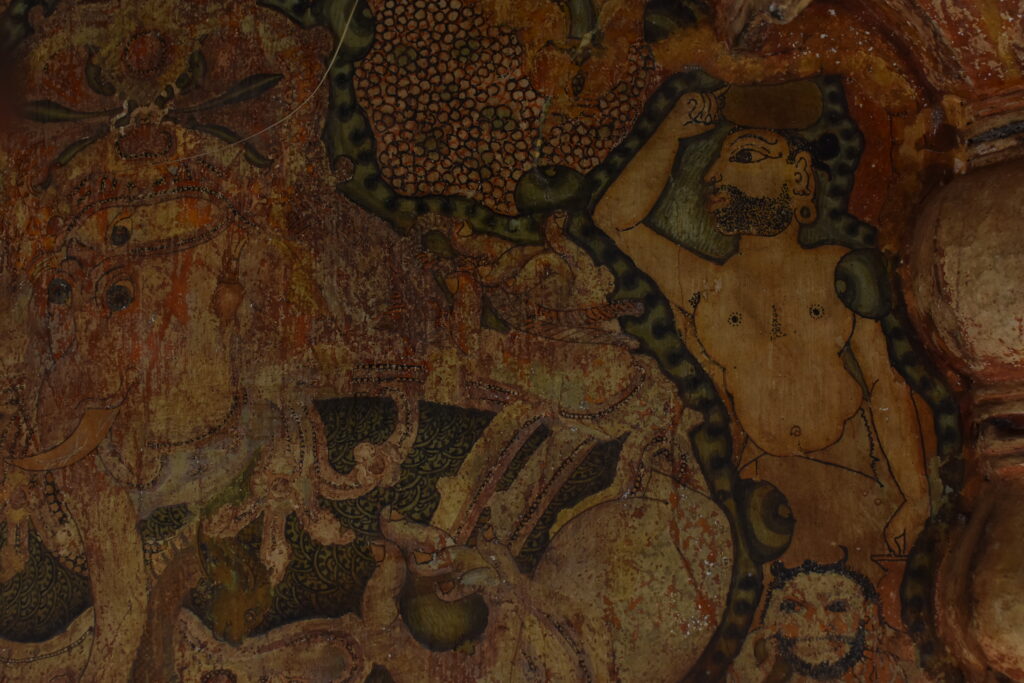
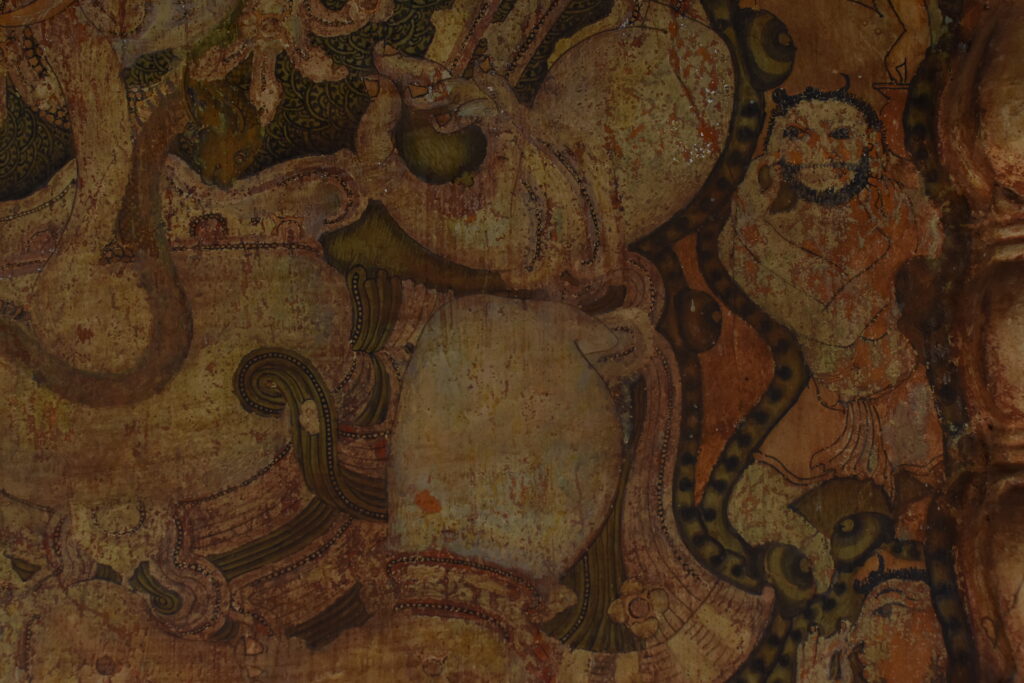
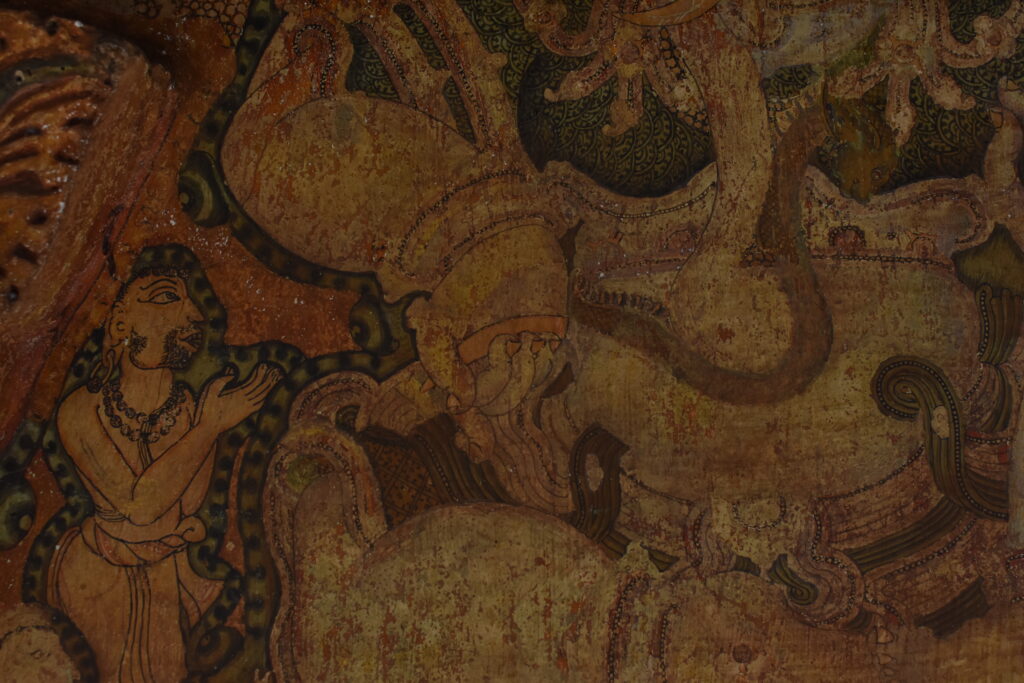
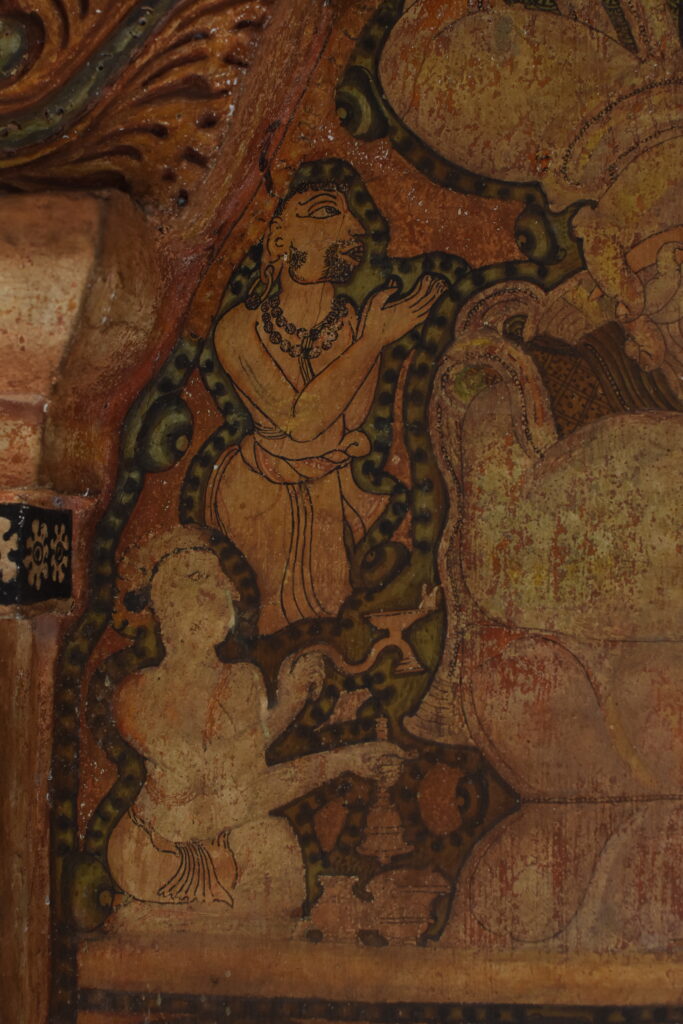
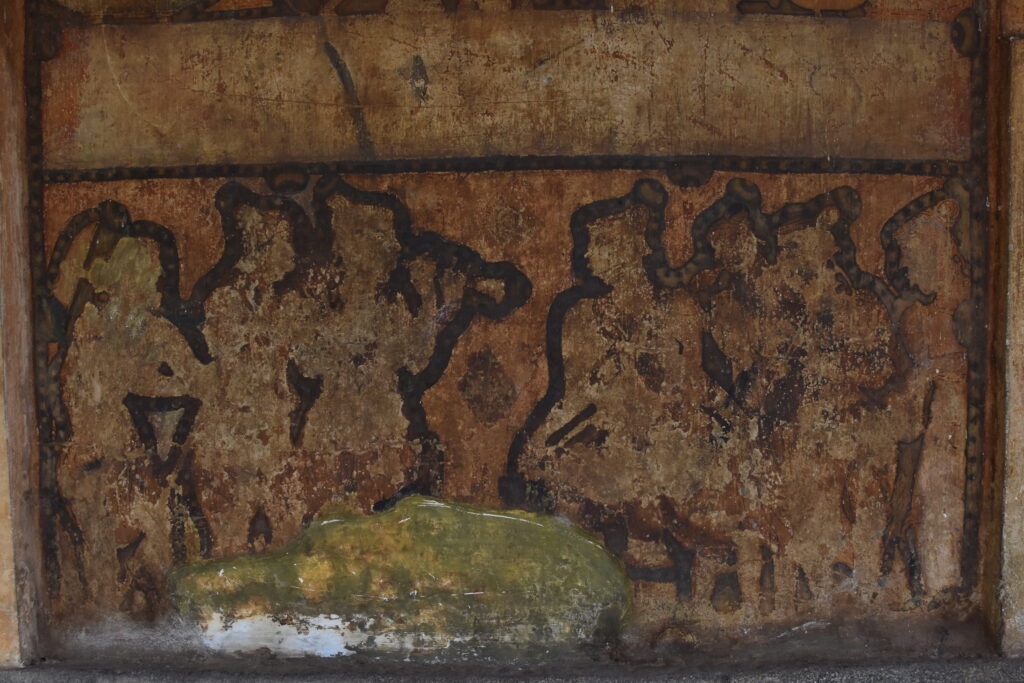
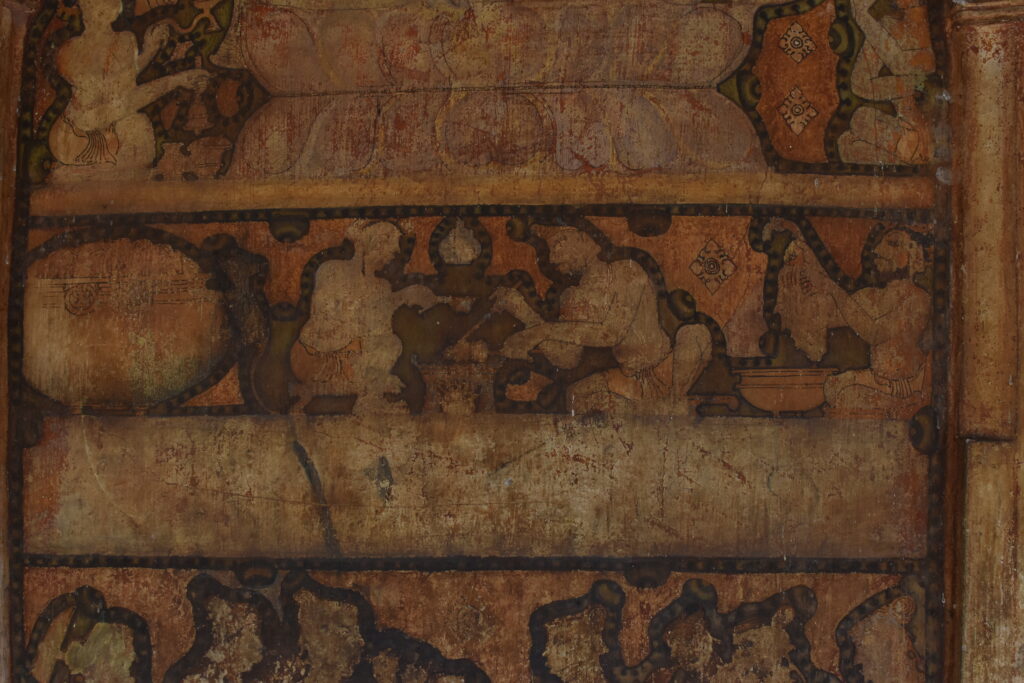
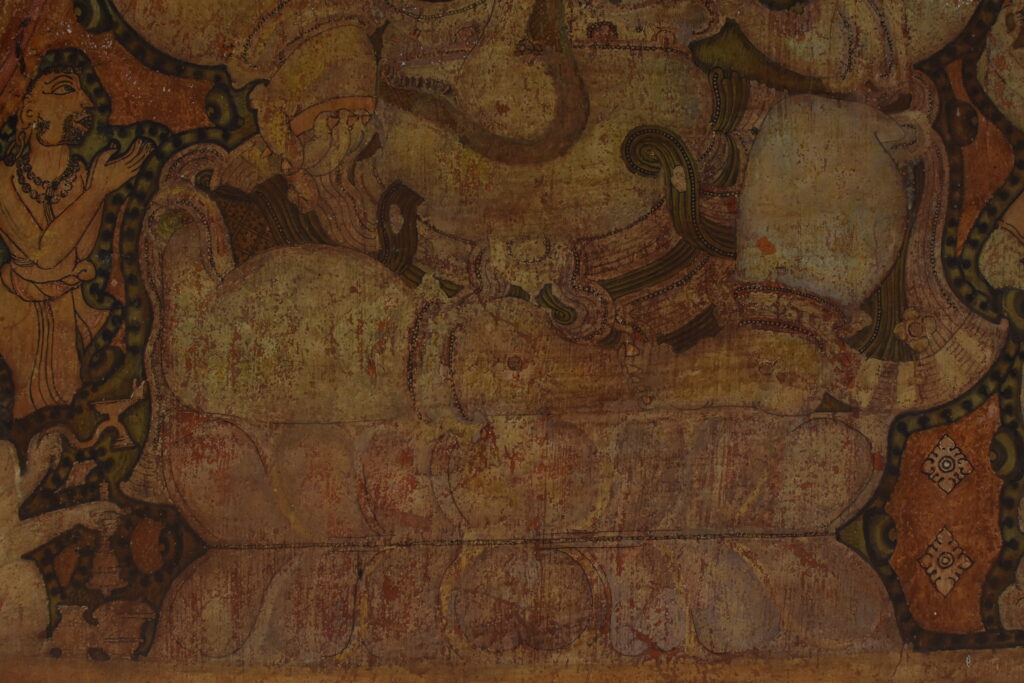
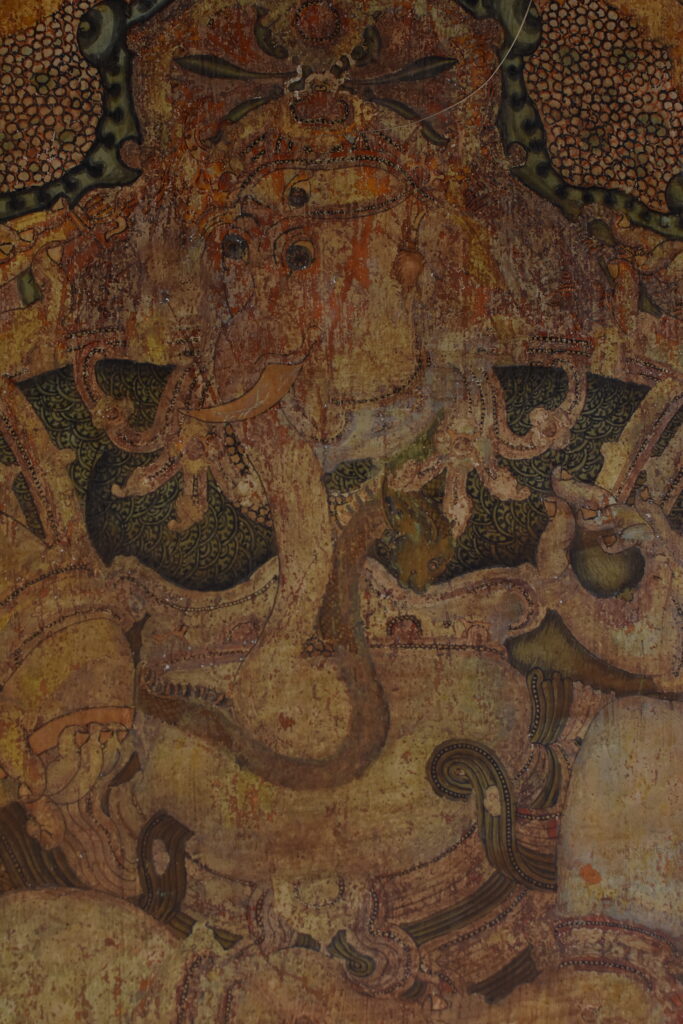
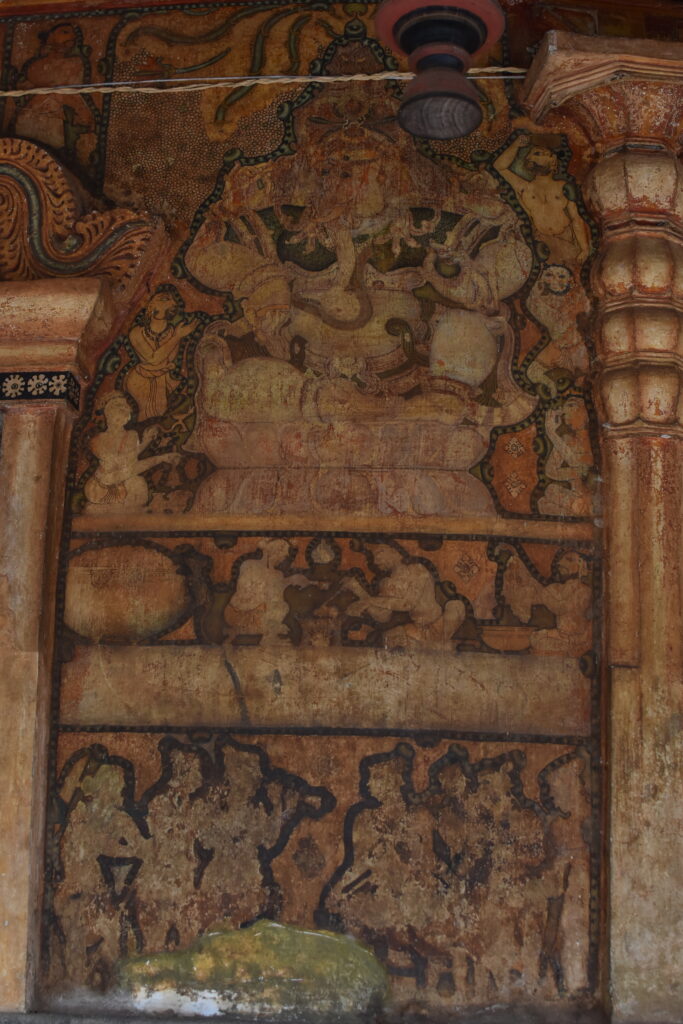
This is one of the common depictions in Kerala mural paintings, that of Ganapathi pooja or worship of Ganapathi. The image shows a golden-skinned, four armed Ganapathi sitting on a bloomed lotus. He has an elephant head and one of his tusks are broken. In the upper right hand, he holds a rope and in the lower right hand, an unripe mango. In his upper left hand he holds an axe and his lower left hand he holds his broken tusk. He has a third eye on his forehead and a crescent moon on his forehead. He wears a green upper garment and his lower garment is red and green. He wears armlets, anklets, bangles, necklace, a crown and waist band. A serpent is coiled around his chest. He is sitting under a tree with one raised leg and other folded leg. He is being worshipped by several devotees whose attire resembles those worn by common people of Kerala during the pre-nineteenth century. A man to his upper right is bringing a jackfruit as offering, another man standing below him is trying to hold his ears using his opposite arms, trying to please Ganapathi using this exercise which is locally known as etham idal. Another man below him is doing pranayama meditation. Two men appear to his left, one of whom is standing with folded hands in an anjali mudra while the other has a lit lamp doing aarathi (moving a lamp in circular motion as part of worship) in one hand and ringing a bell using his other hand. There are also kindi and one other vessel commonly found in Keralaite households, kept near him. Two men in the immediate bottom panel are preparing something in a wooden stove. It looks like payasam, a kind of sweet porridge. There is an kuttakam (a large vessel) full of modakas that the mushika or mouse (Ganapathi’s mount) is trying to taste. There is another man at the farther right side of this panel with a bunch of bananas held over an uruli (vessel). Underneath, there is another band which consists of seven faded figures playing musical instruments.