Kerala Mural Archive · Visual Essay
The Aesthetics of Affect
Rasa Theory and Kerala Mural Painting
The painters of Kerala murals were not working intuitively. They were working within a precise theoretical framework — one that governed not just what they painted, but what the viewer was supposed to feel standing before the finished wall. That framework is the rasa system, and understanding it changes how you look at every mural in this archive.
The Theory
What Rasa Means
The Sanskrit term rasa translates roughly as essence, flavour, or juice — the distilled emotional quality that a work of art is designed to produce in the viewer. The theory, first articulated by Bharata in the Natyashastra, identifies eight primary rasas. A ninth — shanta (tranquillity, peace) — was added later, and appears in the Vishnudharmottaram, one of the primary textual sources for Kerala mural painting.
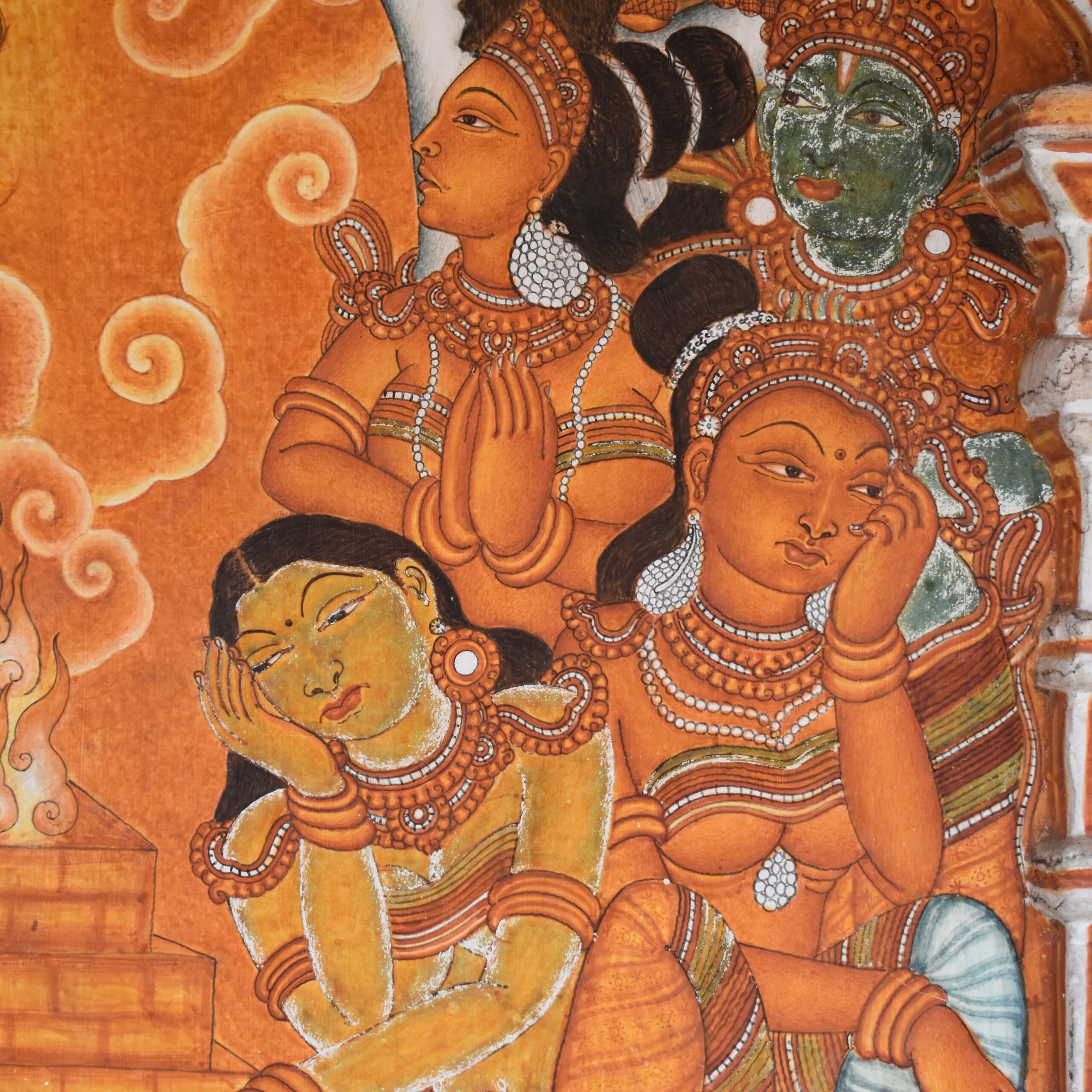
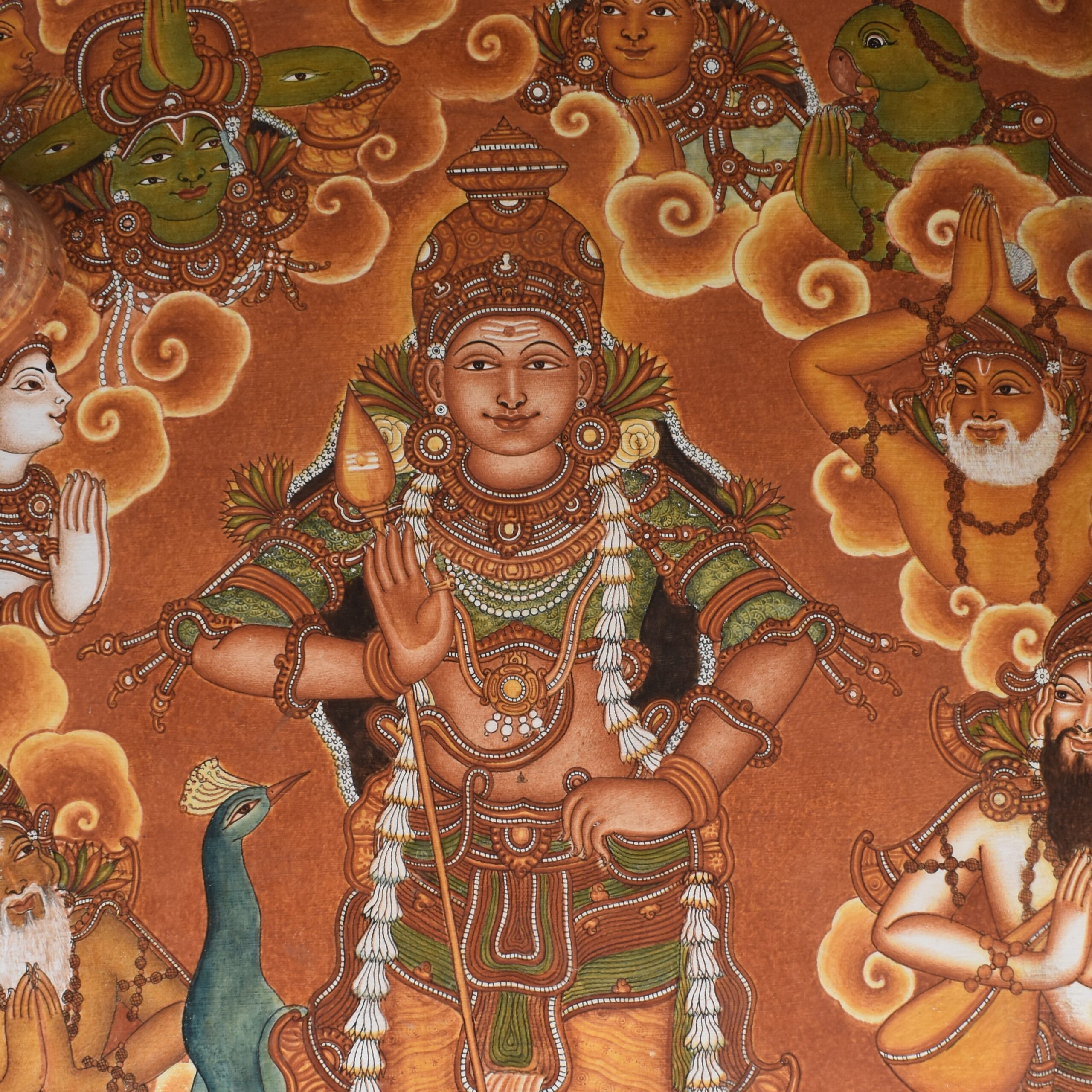
In Kerala murals specifically, shanta rasa dominates. This is a deliberate theological choice. The murals were painted for temple interiors — spaces designed to produce a particular quality of stillness in the devotee. Sringara and veera also appear prominently. But the overriding emotional register of the tradition is one of peaceful, absorbed devotion.
Colour as Theology
How Rasa governs colour
The rasa system does not operate only through subject matter and composition. It operates through colour — and this is where the theory becomes most visually legible.
Each deity possesses characteristic gunas — intrinsic qualities of nature. These qualities carry precise colour prescriptions:
| Guna | Quality | Colour prescribed |
|---|---|---|
| Satvika | Pure, luminous | Green |
| Rajasa | Energetic, passionate | Red or yellowish-red |
| Tamasa (Vaishnavite) | Dark, inert | White |
| Tamasa (Shaivite) | Dark, inert | Black |
The rasa-to-colour mapping extends further across the picture surface:
Space & Regulation
How Rasa governs the body — and the home
The rasa system governs what can be painted where. Ancient treatises including Chitrasoothram and Chitralakshana warn that scenes inciting karuna rasa — war, cemetery, death — can only be depicted in temples and palace assembly halls. They cannot be depicted in homes. Only hasya, sringara, and shanta rasas are permissible in domestic spaces. The entire rasa system is also a regulation of space and context.
Chitrasutra · The Stakes of Painting
Spirits inhabit an imperfect image
There is a warning in Chitrasutra that even the most talented Brahmin cannot make gods inhabit a disproportionate or imperfect image. In such images, spirits and ghosts may inhabit instead. A perfect image — one in which all eight gunas or qualities are present — brings prosperity to the artist, the land, and the people.
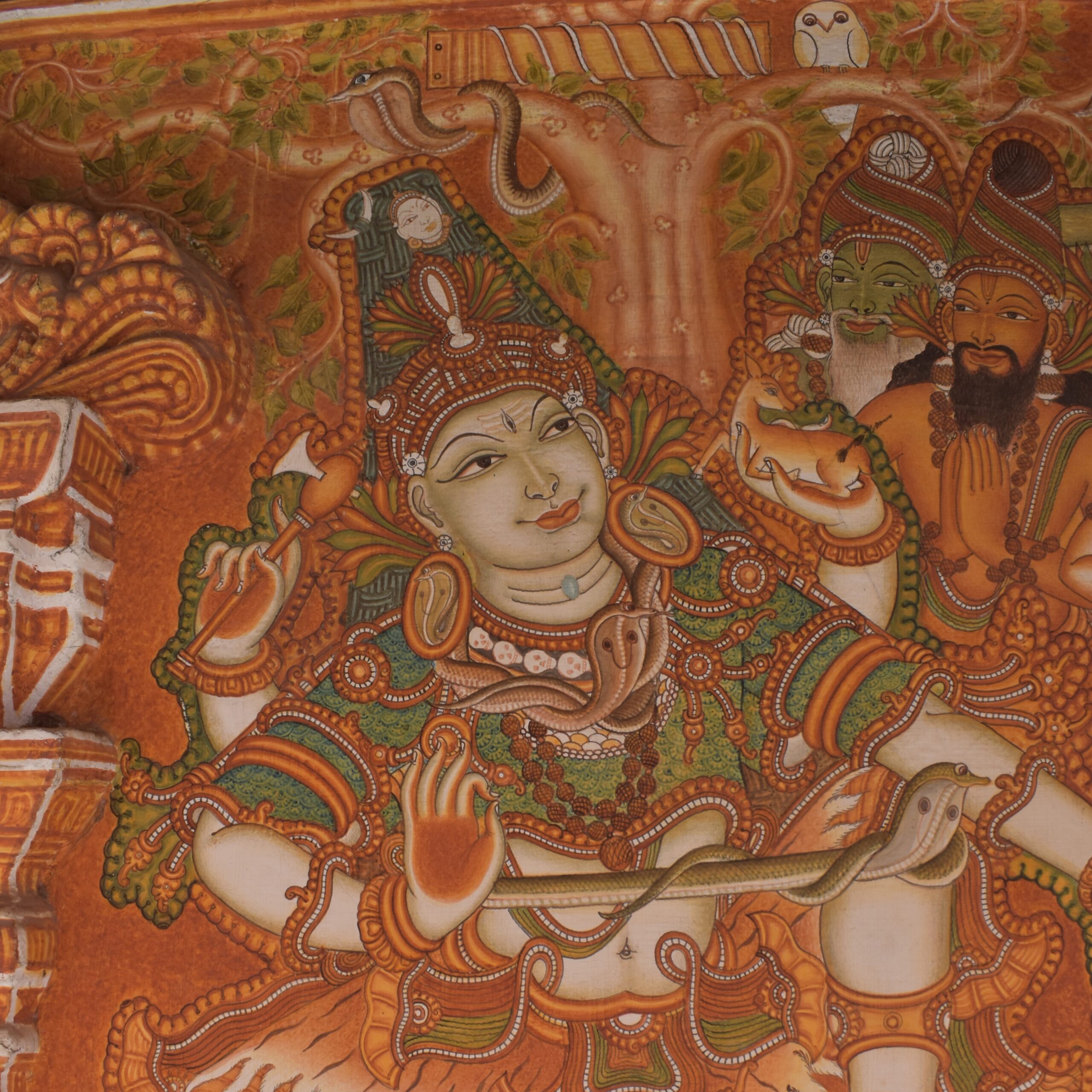
Dakshinamoorthi — the still face of shanta rasa, the dominant register of Kerala's temple murals
How to Look
Reading a wall through rasa
Return now to any mural in this archive and look at it through this framework. The dominant warmth of the saffron ground — bhakti. The green of Krishna's skin — satvika, pure. The red of a warrior's dress — rajas, energy. The white of Hanuman — dissolution of ego in devotion. The still, absorbed faces of meditating sages — shanta, tranquillity.
None of this is decoration. Every colour was chosen. Every gesture was prescribed. The painters were working within a system designed to produce specific emotional states in specific viewers in specific spaces.
That system is still legible on the walls, for those who know how to look.
References
Textual sources
Bharata. Natyashastra. [Original Sanskrit treatise; multiple modern translations.] Primary source for the eight-rasa theory.
Vishnudharmottaram. [Sanskrit text.] Source for the ninth rasa (shanta) and for iconographic prescriptions governing Kerala mural painting.
Chitrasoothram / Chitralakshana. [Sanskrit treatises on painting.] Source for spatial regulations governing rasa-appropriate subject matter in temples, palaces, and domestic spaces.