Space & Ritual
Architecture, Ritual, and the Logic of Painted Space
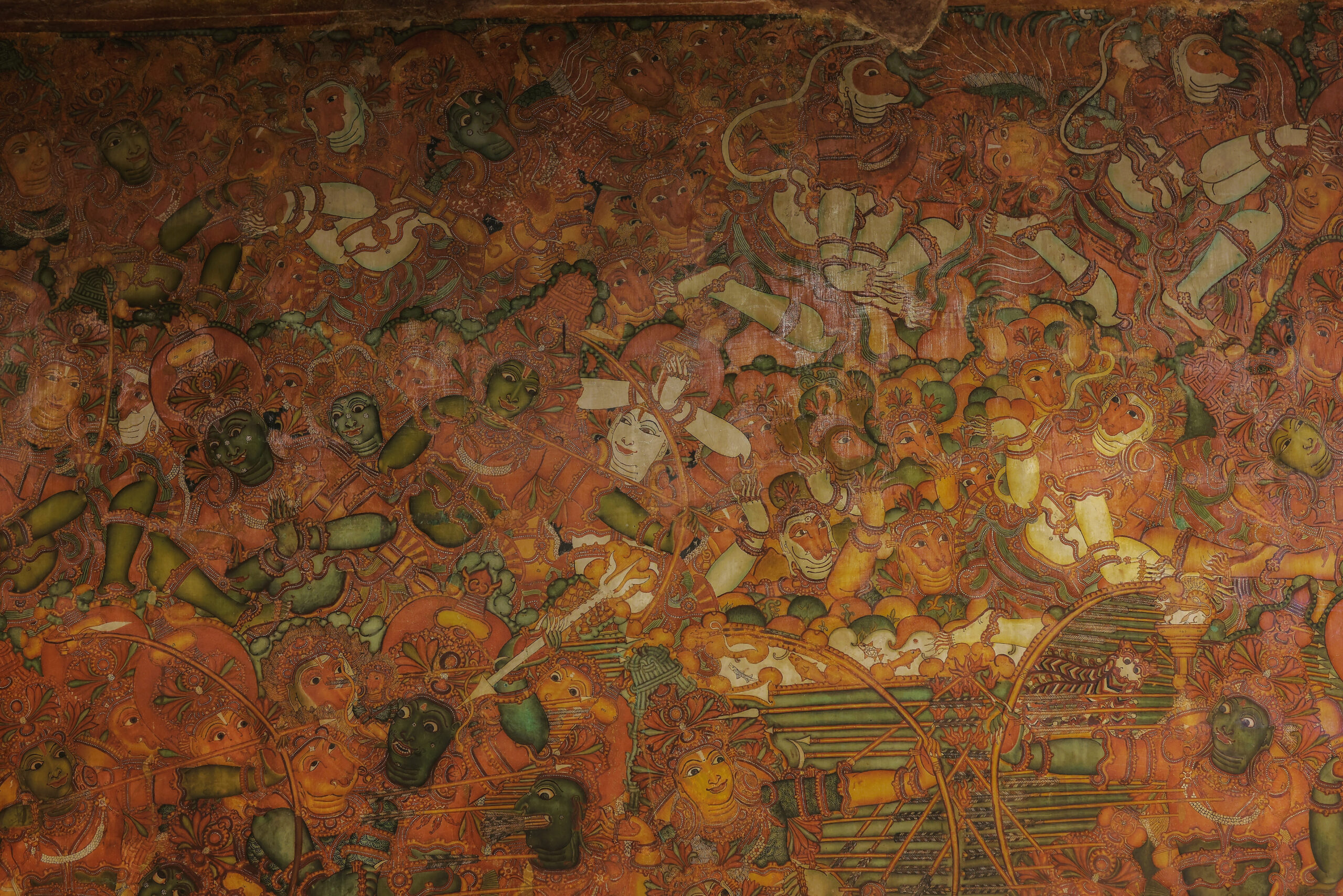
The Spatial Frame
Kerala murals were not made to be viewed in isolation. They were made for specific rooms, specific walls, specific orientations — in relation to the deity's shrine, to the direction of ritual movement, to the quality of light that lamps and windows allowed.
To see a mural reproduced on a screen is to see it displaced from the logic that determined everything about it.
This section attempts to restore some of that spatial context. The virtual tour places you inside documented sites. The subpages explain the architectural and ritual frameworks that shaped what painters could do and where they could do it.
Virtual Tour
Use headphones for the best experience.
NOTE Virtual tour developed as part of doctoral fieldwork documentation, IIT Jodhpur, 2026.
Explore the Subpages
The murals you see in the tour exist within two distinct architectural traditions — the temple and the palace — each with its own spatial logic and ritual framework.
The Sacred Enclosure
Temple murals in Kerala were not decorative additions to an existing space. The space was designed around them — the garbhagriha, the circumambulatory path, the pradakshina — each architectural element shaping what was painted where, and why.
Explore →The Royal Register
Palace murals operated within a different set of obligations than temple murals — serving royal patronage and political identity alongside devotional purpose. The Mattancherry and Krishnapuram cycles are the most complete surviving examples of this tradition.
Explore →How the Murals Were Used
A mural seen during daylight by a tourist is a different object than the same mural seen by lamplight during a festival. This page explores the ritual contexts that shaped how Kerala murals were experienced — and what is lost when that context disappears.
Explore →